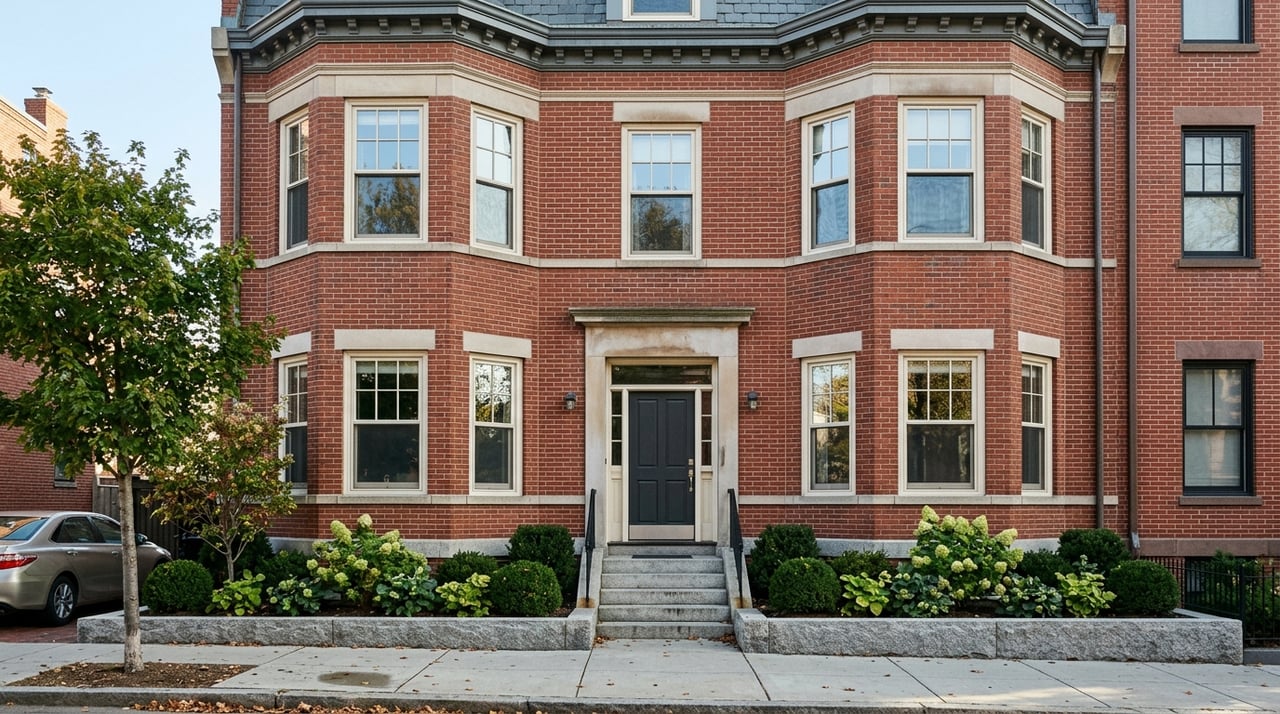
Brookline Real Estate Resilience in Shifting Markets
April 23, 2026
April 23, 2026
Wondering why Brookline real estate often stays resilient even when the broader market feels less certain? If you are buying, selling, or simply trying to make sense of local housing trends, Brookline can look like its own world compared with much of Massachusetts. The good news is that there are real, measurable reasons for that staying power, and understanding them can help you make better decisions. Let’s dive in.
Brookline continues to behave like a premium submarket, even as conditions shift elsewhere. According to Redfin’s Brookline housing market data, the median sale price was $1.65 million in March 2026, with median days on market at 19, an average of two offers, and a 100.1% sale-to-list ratio.
That pace stands out when you compare it with broader benchmarks. The same Redfin data shows Massachusetts at $645,500 and 31 days on market in March 2026, while national data on the same platform showed a much longer median marketing timeline in early April 2026. In practical terms, Brookline still tends to clear faster than many surrounding and statewide markets.
That does not mean every property performs the same way. Redfin also reports that 28.6% of homes sold above list price while 18.1% had price drops, which points to a market with real separation between strong listings and weaker ones. In Brookline, quality, pricing, and presentation still matter.
One of Brookline’s biggest strengths is also one of its simplest. There is only so much land to work with.
Brookline covers about 6.8 square miles and is bordered by Boston, Newton, and Cambridge, which naturally limits outward expansion. The town’s land-use planning also points growth toward infill and existing commercial districts, including the Route 9 corridor, rather than broad new greenfield development, according to a Brookline planning document.
On top of that, Brookline preserves meaningful open space and nature sanctuary land. The town’s Open Space and Recreation Plan helps explain why supply growth is not easy to accelerate. When land is limited and expansion is constrained, inventory tends to remain tighter over time.
Scarcity alone does not guarantee price growth, but it can create durability. In Brookline, fewer opportunities to add large amounts of housing can help support values when demand remains steady.
This matters most in shifting markets. When other areas can add supply more easily, they may feel market slowdowns more directly. Brookline’s structure can help cushion that effect.
Brookline’s convenience is another major factor behind its resilience. The town has unusually strong transit access for a close-in suburb.
According to the town’s MBTA Green Line page, the Green Line C and D branches serve Brookline directly, the B branch reaches the northern edge, and bus routes 51, 60, 65, and 66 connect residents to Boston, Cambridge, and the Longwood Medical Area. Brookline’s Complete Streets policy also emphasizes connected options for walking, biking, transit, and driving.
That connectivity supports everyday usefulness, not just commute times. Brookline’s commercial activity is concentrated in village centers such as Brookline Village, Coolidge Corner, and Washington Square, with business associations and Bluebikes access highlighted on the town’s local business associations page. For many buyers, that mix of transit and walkable errands remains attractive in nearly any market cycle.
Brookline’s transportation patterns also show that many households live with less dependence on a car. A town planning document notes that 28% of households lacked vehicle access in 2017 through 2021, compared with 12% in Massachusetts and 8% nationally, according to the same Brookline planning source.
That can matter more than people realize. When gas prices rise, traffic worsens, or work patterns change, places that support daily life without a car can remain appealing to a wider range of buyers and renters.
Demand in Brookline is supported by more than location alone. The town also has a strong economic and demographic profile.
The U.S. Census Bureau’s Brookline QuickFacts show a population of 63,191, median household income of $142,101, and 85.4% of adults with a bachelor’s degree or higher. The same source reports a median value of owner-occupied homes of $1,246,800 and median gross rent of $2,835.
Those numbers help explain why Brookline often attracts steady interest across both the ownership and rental sides of the market. Town housing materials also note that Brookline draws residents because of its access to Boston, nearby universities, and the Longwood Medical and Academic Area, while elevated home values and limited affordable rental options continue to keep housing demand competitive, according to the Brookline Nexus Study Report.
Brookline is not driven by just one type of housing demand. The Nexus Study says the town had about 29,000 residential units in 2022, 94% occupied, with renters at 54% and owners at 46%.
That balance matters in uncertain markets. A town with meaningful demand from both owner-occupants and renters can sometimes show more stability than a market that relies too heavily on only one segment.
A common mistake is assuming that Brookline real estate is always easy. It is not.
Redfin’s data makes that clear. Some homes receive multiple offers and sell above list, while others need price reductions. That tells you Brookline is resilient, but still selective.
For sellers, this means strategic pricing and thoughtful positioning are essential. For buyers, it means you should be ready to move quickly on well-located, well-prepared listings, while also recognizing that not every property will command a premium.
If you are buying in Brookline, speed and preparation matter. Homes can move quickly, and the best opportunities may not leave much room for hesitation.
At the same time, not every listing is a bidding war. Differences in condition, layout, price, and micro-location can create openings for buyers who are informed and ready to act.
Here are a few practical buyer takeaways:
That last point is important. Zillow’s Brookline home values page showed a typical home value of $1,211,601 as of March 31, 2026, down 2.6% year over year, with homes going pending in about 21 days. That differs from Redfin’s sales-based figures because the methodologies are different, so it is best to use consistent metrics when evaluating a specific purchase.
If you are selling in Brookline, the town’s long-term strengths can work in your favor, but they do not replace strategy. Buyers still respond to pricing discipline, strong presentation, and realistic expectations.
This is especially true in a segmented market. A well-positioned listing may attract immediate attention, while an overpriced or poorly prepared property can sit and require reductions.
For sellers, the practical approach is to:
For homeowners who do not need to sell immediately, Brookline’s limited land supply, transit access, and durable demand profile may support a longer-term hold strategy better than in less constrained markets.
Brookline is one of those markets where averages can hide as much as they reveal. Two properties in the same town can perform very differently based on block, building type, condition, and access to daily amenities.
That is why local context matters so much. In a market with strong fundamentals but clear segmentation, your outcome often depends on how well your pricing, search strategy, negotiation plan, and timing match the specific property.
Whether you are buying a home, evaluating a sale, or planning your next move in Brookline, a more detailed and property-level approach usually leads to better decisions. If you want strategic guidance tailored to Brookline and Greater Boston, you can schedule a consultation with EEA Real Estate LLC (Easter Entwistle Advisors).
We don't just close deals; we build portfolios and long-term wealth. Whether you are an international buyer or a local seller, we provide a concierge experience that manages every detail. Reach out to us to experience the power of having a dedicated advisory team in your corner.
EASTER ENTWISTLE ADVISORS
316 NEWBURY ST STE 20 BOSTON, MA 02115