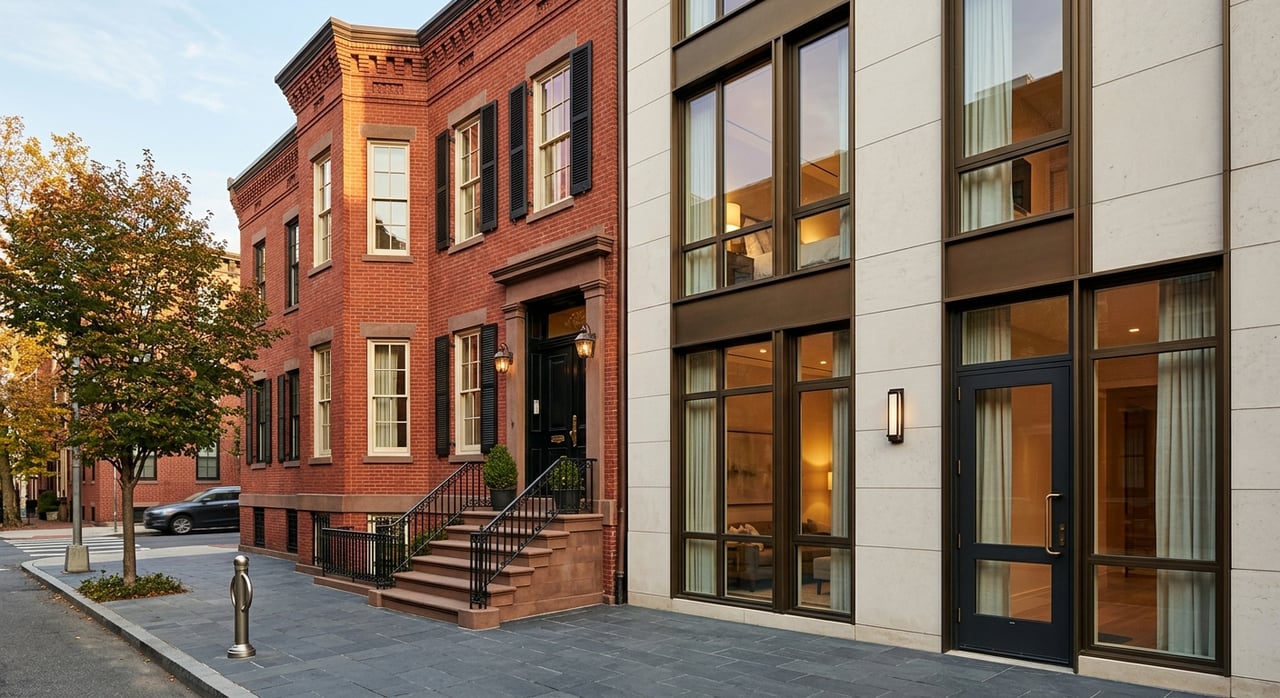
South End New vs Historic Homes: Find Your Right Fit
May 21, 2026
May 21, 2026
Choosing in the South End often comes down to a very Boston question: do you want the charm of a historic brownstone or the convenience of newer construction? If you are weighing both, you are not alone. Each option can work beautifully, but they serve different priorities, ownership styles, and resale audiences. This guide will help you compare the two in practical terms so you can make a more confident South End decision. Let’s dive in.
The South End is one of Boston’s most distinctive residential neighborhoods, known for its Victorian streetscape, brick rowhouses, parks, and active restaurant and arts scene. Boston Planning describes it as a mix of historic town homes, public housing, and newer development, which is part of what makes the neighborhood feel layered and dynamic.
That mix creates two very different buying experiences. On one side, you have historic brownstones and rowhouses that reflect the neighborhood’s 19th-century development pattern. On the other, you have newer condo buildings that often package modern convenience into the building itself.
The South End’s historic core grew from development that began around 1850 on filled tidal flats. According to the Boston Landmarks Commission, many of the neighborhood’s rowhouses were built in long, uniform rows, which still shapes the look and rhythm of South End blocks today.
For you as a buyer, that often means a home with strong architectural character and a more vertical layout. Historic rowhouses tend to emphasize proportion, facade detail, stoops, bays, and cornices rather than open-plan efficiency. The result can feel elegant, distinctive, and deeply tied to the neighborhood’s identity.
Inside, these homes may live differently from newer condos. The South End Landmark District standards focus heavily on exterior compatibility and streetscape character, and they note that newer buildings do not need to replicate the narrow internal rowhouse configuration. In plain terms, that helps explain why a brownstone may offer a very different flow and feel from a modern building nearby.
If you are considering a historic property, one of the most important diligence steps is confirming whether it sits within the South End Landmark District. That is not a small detail. It can affect what changes are possible and how long exterior work may take to approve.
The district standards state that exterior alterations require review, and no building permit may be issued before a certificate of design approval or exemption is granted. The rules apply to more than major additions. Repairs, restoration, replacement, masonry cleaning, repointing, painting, windows, roofs, facades, and visible mechanicals can all fall within the review process.
That does not make a brownstone a poor choice. It simply means you should go in with clear expectations. If you value architectural continuity and preservation, this oversight may feel like part of the appeal. If you want fast, flexible exterior updates, it may feel more restrictive.
Newer South End condos tend to tell a different story. Boston Planning project pages for recent and current development show multi-family and mixed-use projects that may include outdoor open space, retail components, parking, and broader public-realm improvements. For buyers, that often translates to convenience features being built into the ownership experience.
In practical terms, new construction is more likely to appeal if you want a more streamlined day-to-day routine. Elevators, parking, shared amenities, and lower-friction building operations can be a major advantage, especially if you travel often, split time between cities, or simply prefer easier upkeep.
That said, new does not mean unregulated. Within the South End Landmark District, new construction is also reviewed for compatibility in massing, materials, and proportion before permits can be issued. So even newer projects in the area are shaped by the district’s design framework.
In Massachusetts, condo ownership is governed by Chapter 183A. Under that framework, the organization of unit owners manages and regulates the condominium, and common areas can include things like roofs, halls, elevators, parking areas, storage spaces, and shared systems.
This matters because the ownership structure often changes how maintenance feels in real life. In many newer buildings, more of the building-wide upkeep is handled through common expenses and association management. In a historic rowhouse conversion, responsibilities may be divided differently depending on how the property was set up.
Massachusetts law also allows certain limited common area costs to be assessed to the unit owner who benefits from them. That is why you should not assume that a roof deck, parking space, storage area, or outdoor area is owned the same way in every building. The exact structure matters.
Massachusetts law requires an adequate replacement reserve fund to be collected as part of common expenses and kept separate from operating funds. That is a meaningful point for buyers because reserve strength can affect both your ownership experience and future resale.
A building with healthy reserves may be better positioned for future repairs and replacement needs. A building with weak reserves or a history of special assessments can raise concerns for buyers and lenders. It can also change the true cost of ownership in ways that are not obvious from the list price alone.
This is one area where process matters. Reviewing the condo budget, reserve fund balance, and recent or anticipated special assessments can give you a clearer picture of the building’s financial health before you commit.
One of the most useful ways to compare a South End brownstone and a newer condo is to think about future buyer demand. The key resale question is often not whether a home is newer or older. It is whether the property aligns with the priorities of its likely buyer pool.
Historic rowhouses often sell a character story. Buyers may be drawn to brick facades, proportion, neighborhood continuity, and the preservation value of living within a landmarked setting. Newer condos often sell a convenience story, with features like parking, elevators, amenities, and a lower-friction ownership experience.
Neither story is better across the board. The better fit depends on what you value now and what future buyers are likely to value later. When you buy with that in mind, you tend to make a more durable decision.
| Factor | Historic Brownstone | New Construction Condo |
|---|---|---|
| Feel | Character-driven, architectural, often more vertical | Convenience-driven, often more streamlined |
| Layout | May be less open and more segmented | Often more efficiency-focused |
| Exterior changes | Often subject to landmark review | May still be reviewed if in district |
| Maintenance | Can vary by property and condo structure | More often centralized through association |
| Amenities | Typically limited by building type | More likely to include parking, elevators, or shared features |
| Resale appeal | Strong for buyers prioritizing character | Strong for buyers prioritizing convenience |
Before you choose, it helps to move beyond aesthetics and ask a few practical questions:
If you are drawn to classic South End architecture, streetscape continuity, and a home with historic presence, a brownstone may feel like the right long-term fit. If you want lower-friction ownership, more building-integrated convenience, and a more lock-and-leave lifestyle, newer construction may better match your needs.
In the South End, this is rarely a simple style choice. It is a decision about process, maintenance, governance, and resale positioning. The best outcome usually comes from matching the property type to your day-to-day priorities, not just your first impression.
If you want a clear, strategic view of South End options, Easter Entwistle Advisors offers senior-level guidance grounded in Boston market experience, new-development insight, and discreet, concierge-style execution. Schedule a consultation.
We don't just close deals; we build portfolios and long-term wealth. Whether you are an international buyer or a local seller, we provide a concierge experience that manages every detail. Reach out to us to experience the power of having a dedicated advisory team in your corner.
EASTER ENTWISTLE ADVISORS | CORCORAN PROPERTY ADVISORS
14 NEWBURY ST BOSTON, MA 02116