Selling a Back Bay Brownstone: The Calendar You Don't Control
August 20, 2026
August 20, 2026
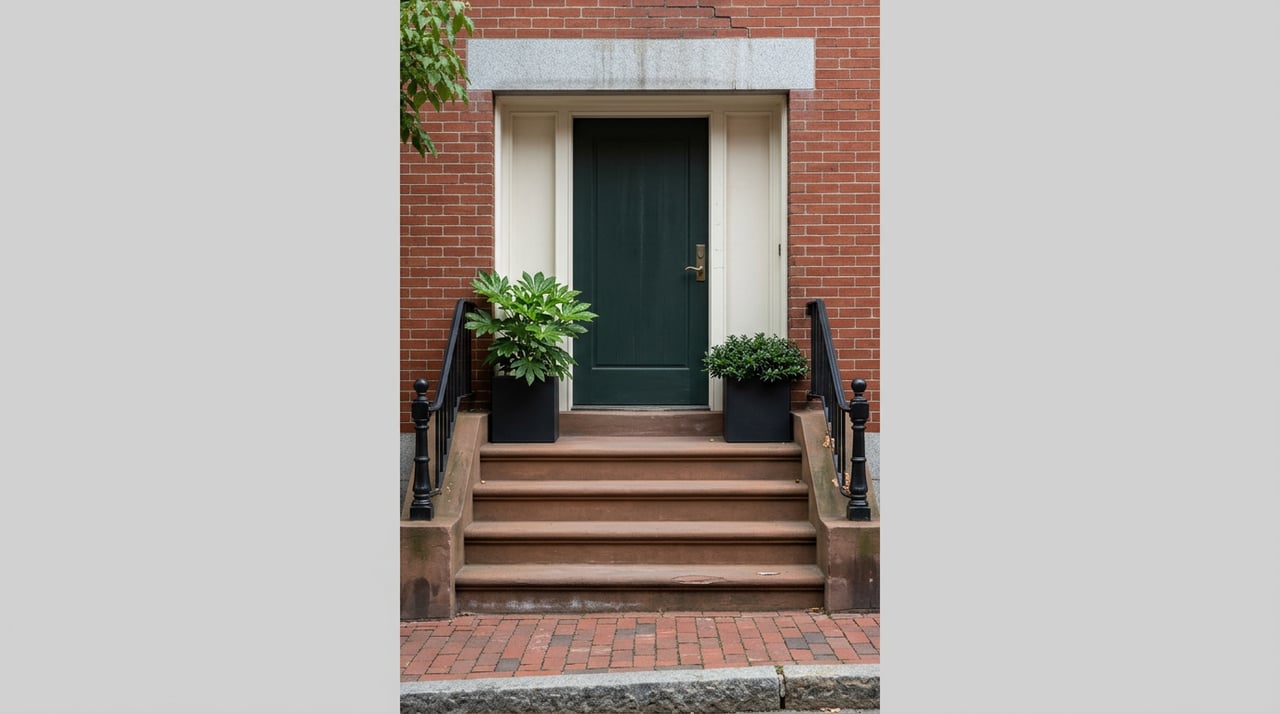
On August 12, the Back Bay Architectural Commission sat down for its monthly hearing and worked through a docket that reads like a walking tour of the neighborhood's maintenance backlog. Windows at 330 Beacon Street. Repointed masonry and recaulked windows at 417 Beacon. A rebuilt chimney at 274 Clarendon. Bay windows swapped for wood casements at 65 Commonwealth Avenue, a dormer resealed at 123 Commonwealth, copper cladding replaced in kind at 175 Commonwealth, entry steps repaired at both 10 Fairfield Street and 355 Marlborough Street. Every one of those projects, no matter how routine it sounded on a contractor's invoice, had to wait for a seat at that single Wednesday hearing before a single tool touched the building.
That is the detail most sellers miss when they start planning pre-listing touch-ups on a Back Bay brownstone. The renovation timeline you build in your head, the one where a cracked stoop or a tired front door gets fixed in a week or two before photos, does not exist here. The commission's calendar runs the schedule, not your listing date.
The commission's own guidelines draw a sharp line between two categories, and it is not where most owners expect it. "Maintenance and repair" is defined narrowly, as work involving no change in materials, dimensions, design, configuration, or color. Everything else, including work that looks purely cosmetic, falls under "exterior work," and the guidelines specifically name masonry cleaning, repointing, repair, and painting as examples that require a hearing before they begin.
That is why 417 Beacon Street's masonry repointing and window recaulking showed up on an official agenda rather than getting handled quietly between a homeowner and a mason. It is also why front steps get their own line in the guidelines: they cannot be rebuilt or repaired in anything other than the original stone masonry or a closely matching modern substitute, and that substitution itself needs sign-off.
Here is how the gap between assumption and reality actually breaks down for a seller weighing pre-listing work:
| What a seller might call quick prep | How the commission classifies it |
|---|---|
| Repainting the front door or shutters | Exterior work, requires a hearing |
| Repointing or cleaning masonry | Exterior work, requires a hearing |
| Replacing a window, even with an identical match | Exterior work, requires a hearing |
| Fixing a cracked or worn front step | Exterior work, requires a hearing and matching stone masonry |
| A window air conditioner installed May through September | Exempt, no hearing needed |
That last row is the only real shortcut in the residential guidelines. Almost everything else a seller might reach for to sharpen curb appeal before listing photos needs to clear the commission first.
The Back Bay Architectural District Commission meets on the second Wednesday of each month, and applications have to be received at least two weeks ahead of that hearing to even make the agenda. An incomplete application simply is not heard. Miss that filing window and the next chance is not next week. It is next month.
For a seller who decides in the third week of a month that the stoop needs work before the photographer shows up, that math is unforgiving. The application has to be complete and filed roughly two weeks before the next second Wednesday, which means a seller working on instinct rather than a calendar can easily lose an entire listing cycle waiting on paperwork for a repair that would take a mason two days to complete.
Once a project does get approved, the clock keeps running in the seller's favor for exactly one year. A Certificate of Appropriateness is valid for twelve months from the date of the hearing, so an owner who plans a year or more ahead has real room to work. An owner trying to compress renovation and listing into the same season does not.
Here is the part of the process that catches sellers off guard hardest. The guidelines state plainly that no application for a Certificate of Appropriateness will be approved while outstanding architectural violations exist on the property. That rule does not care who caused the violation or when.
Look at what was still sitting open on the August 12 docket. A rooftop balustrade alteration, continued since a July 8 hearing. Unapproved masonry work at a front garden entry, also continued from July 8. An unapproved lattice wood enclosure and mechanical equipment at a Marlborough Street property, carried forward since a June 10 hearing. None of these were resolved in a single sitting. Minutes from an earlier hearing in January show the commission routinely continuing violations for 60 or 90 days at a stretch while an owner works with staff to find an approvable fix.
Translate that into a seller's timeline. If a previous owner installed a rooftop screen, a rear fence, or an HVAC condenser without going through the commission, that violation stays attached to the property until it is formally resolved, regardless of who owns it now. A seller who wants to repaint the fence or fix the stoop before listing will find that request stuck behind someone else's unfinished business, sometimes for months, because the commission will not touch a new application until the old violation clears.
That is not a hypothetical edge case. It was sitting on this month's actual hearing agenda, tied to real Back Bay addresses, days before this was written.
Back Bay's housing stock includes a large share of brownstones that were converted into condominiums decades ago, and the guidelines are explicit about how that ownership structure interacts with the review process. When changes are proposed for a condominium or any building under multiple ownership, the entire building is considered and treated as one unit. A single owner cannot independently repaint their share of the facade, swap out their unit's windows, or repair the portion of the stoop nearest their entrance without the building acting together.
For a seller in a converted brownstone, that means pre-listing exterior work is rarely a solo decision. It requires getting the building's other owners or the condo association aligned on a single application before anything can move forward, adding a coordination step on top of the filing deadline and the one-hearing-a-month cadence.
Over the three months ending in May 2026, Back Bay condos and homes sold in an average of 35 days, down from 41 days over the same stretch a year earlier, with 75 homes closing in May alone. The market has gotten faster. The commission has not. It still meets once a month, still requires two weeks of lead time on applications, and still will not touch a new request while an old violation sits open.
A seller trying to match a faster-moving market with pre-listing exterior work is running two clocks that were never built to sync. The listing can move in weeks. The approval process moves in month-long increments, and a stalled violation can push that out by a quarter.
None of this means exterior improvements are off the table before a Back Bay listing. It means the planning has to start with the commission's schedule, not the seller's.
This is the kind of detail that separates a listing that moves cleanly from one that stalls on something the seller never saw coming. If you are weighing pre-listing work on a Back Bay brownstone or condo, Easter Entwistle Advisors can help you map the timeline before you touch the front steps. Schedule a consultation.
We don't just close deals; we build portfolios and long-term wealth. Whether you are an international buyer or a local seller, we provide a concierge experience that manages every detail. Reach out to us to experience the power of having a dedicated advisory team in your corner.
EASTER ENTWISTLE ADVISORS
316 NEWBURY ST STE 20 BOSTON, MA 02115